Hold Each Other Up
Level 2 – Exploratory Learning (Upper Elementary/Middle School) | Language Arts & Oral Narratives | Cooperative Learning, Inquiry-Based
Features of Narrative Writing © J Munro 2007 Point of View When a writer begins a new story he must decide:”Who will tell my story?” An author can tell a story from the first-person point of view. OR The author can use the third-person point of view First-person Point of View •A character in the story is the narrator. This character is telling the story. The narrator uses the pronouns I, me and we. •In first-person point of view, readers learn about events as the narrator learns about them. Third-person Point of View •The story is being told by an outside observer – someone who is not in the story. The author uses the pronouns he, she, and they. •In third-person point of view, the author can tell about the thoughts, actions, and feelings of the other characters. Presenter Presentation Notes For your personal narrative, you will be writing in…
Related Resources
Learning How to Learn
Level 4 – Advanced Practice (High School) | Tlingit Language Units | Inquiry-Based, Direct Instruction
What Are You Eating?
Level 1 – Foundational Learning (Elementary) | Tlingit Language Units | Inquiry-Based, Direct Instruction
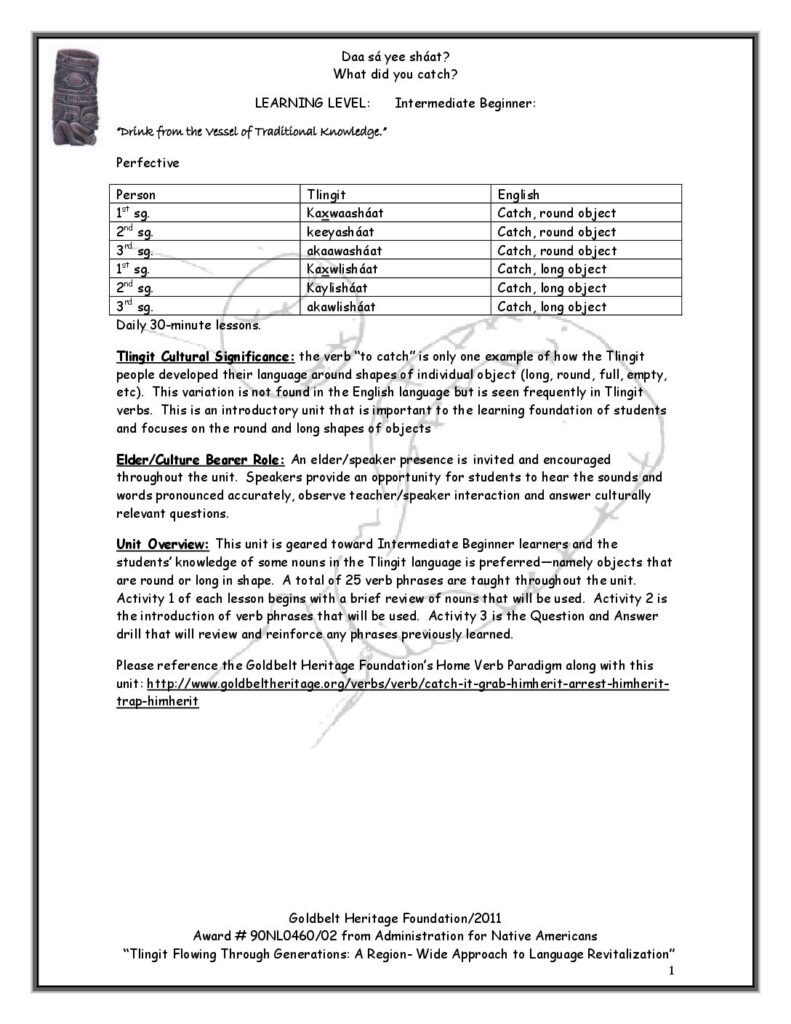
What Did You Catch?
Level 1 – Foundational Learning (Elementary) | Tlingit Language Units | Inquiry-Based, Direct Instruction
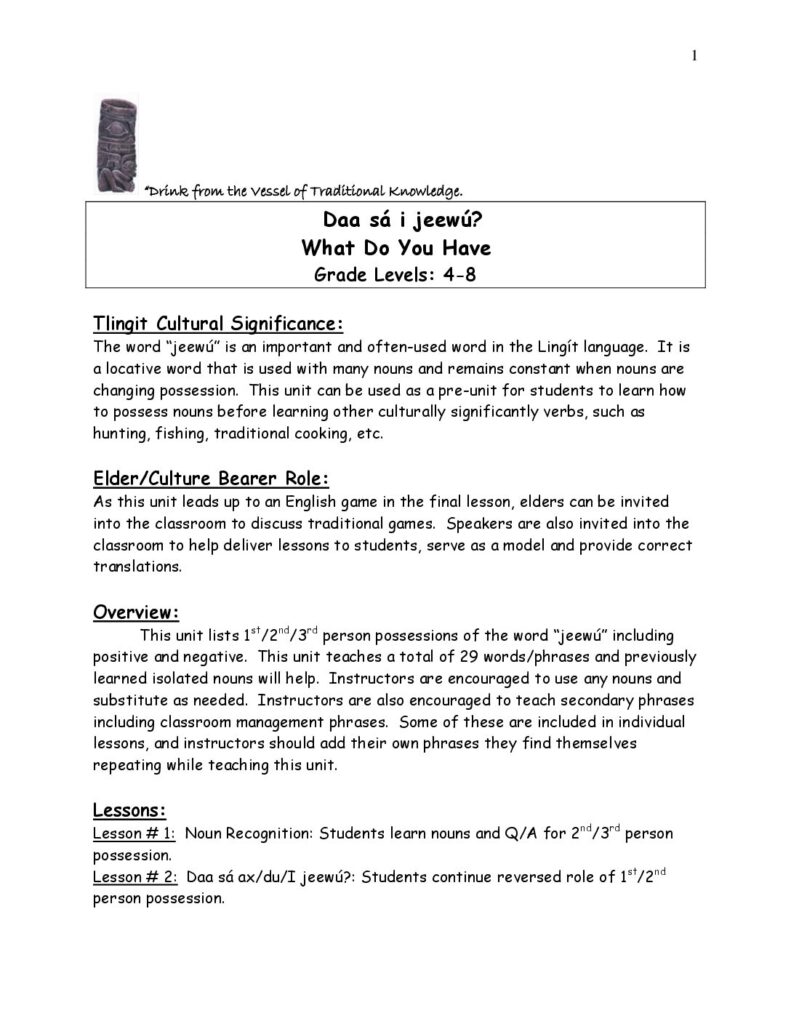
What Do You Have?
Level 1 – Foundational Learning (Elementary) | Tlingit Language Units | Inquiry-Based, Direct Instruction
What is She Wearing?
Level 1 – Foundational Learning (Elementary) | Tlingit Language Units | Inquiry-Based, Direct Instruction