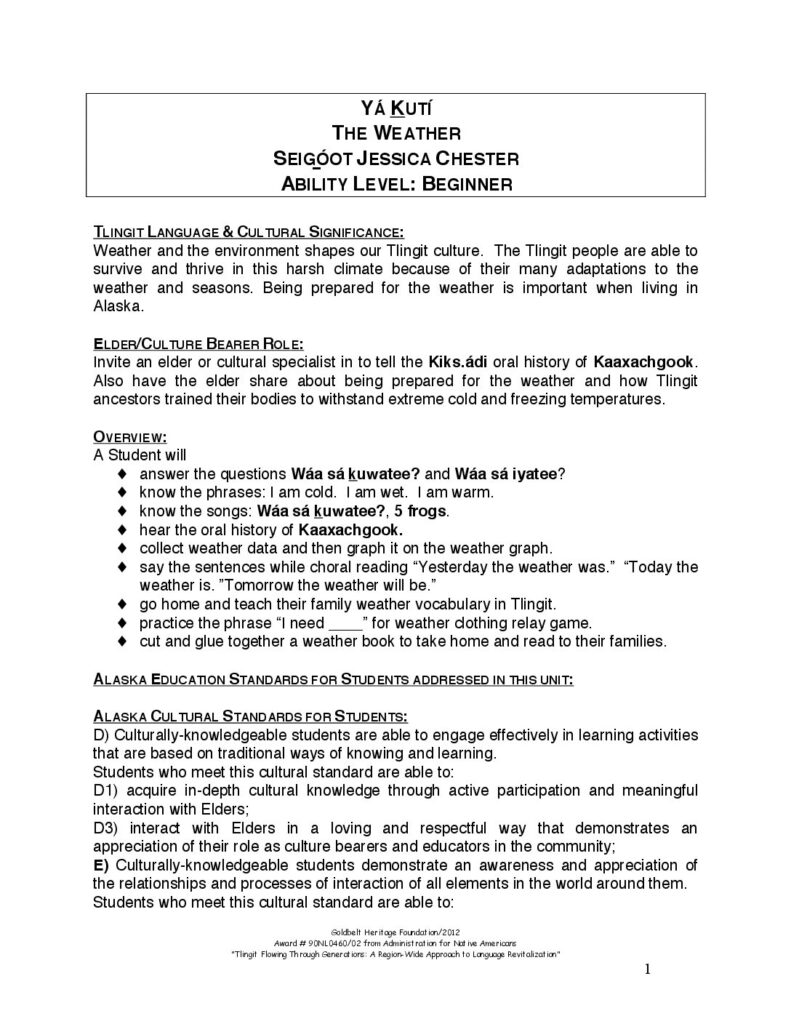
Let’s Go to The River
Level 4 – Advanced Practice (High School) | Tlingit Language Units | Kinesthetic Learning, Direct Instruction
Héen yikdéi náx too.aat Let’s go to the river Tlingit Cultural Significance: If not one of the most important disciplines in the life of a Tlingit education was to listen. One had to be very discipline to stay still and not talk or cause a disruption to the teacher. This could be at story time or during a (Ku.éex’) when history could be told and how one should speak to the opposite clan. Listing to the history of ones clan history and as well as the history of other clans when it was presented. This was a time that the character of the youth would be developed for both women and men. In traditional times young men when turning to adolescent were taken in by there uncles, which would be their maternal uncles (mothers brother). The uncles taught them what was needed to know and skills it took to be…
Related Resources
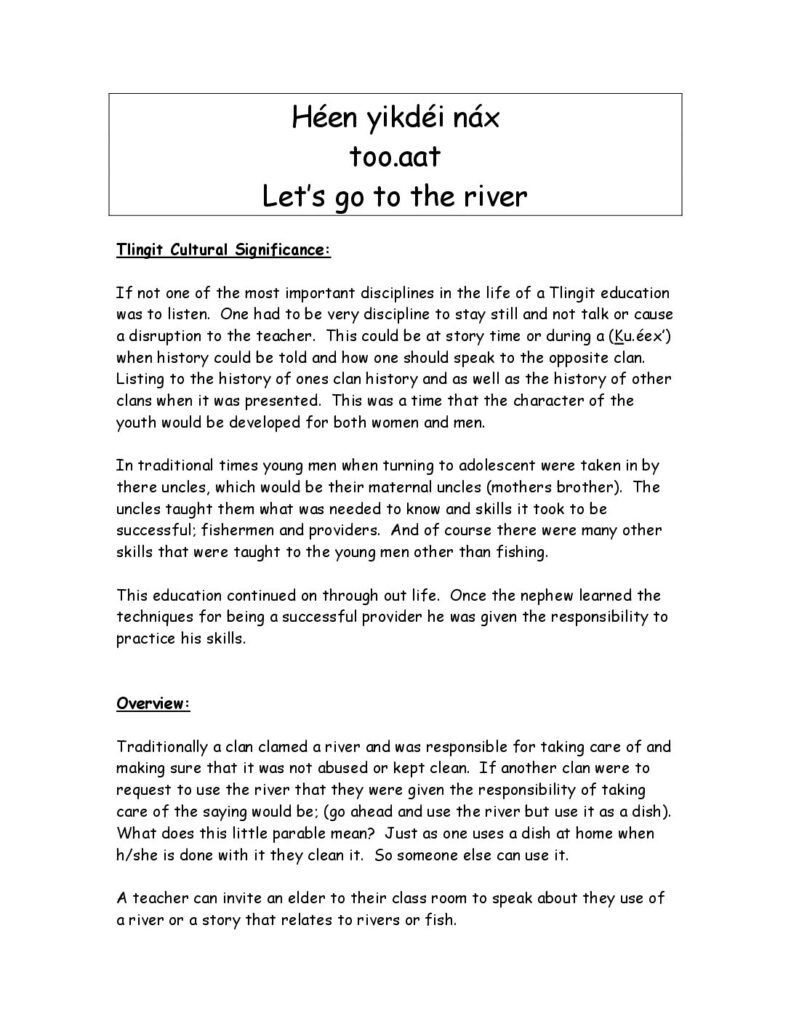
What Are You Eating?
Level 1 – Foundational Learning (Elementary) | Tlingit Language Units | Inquiry-Based, Direct Instruction
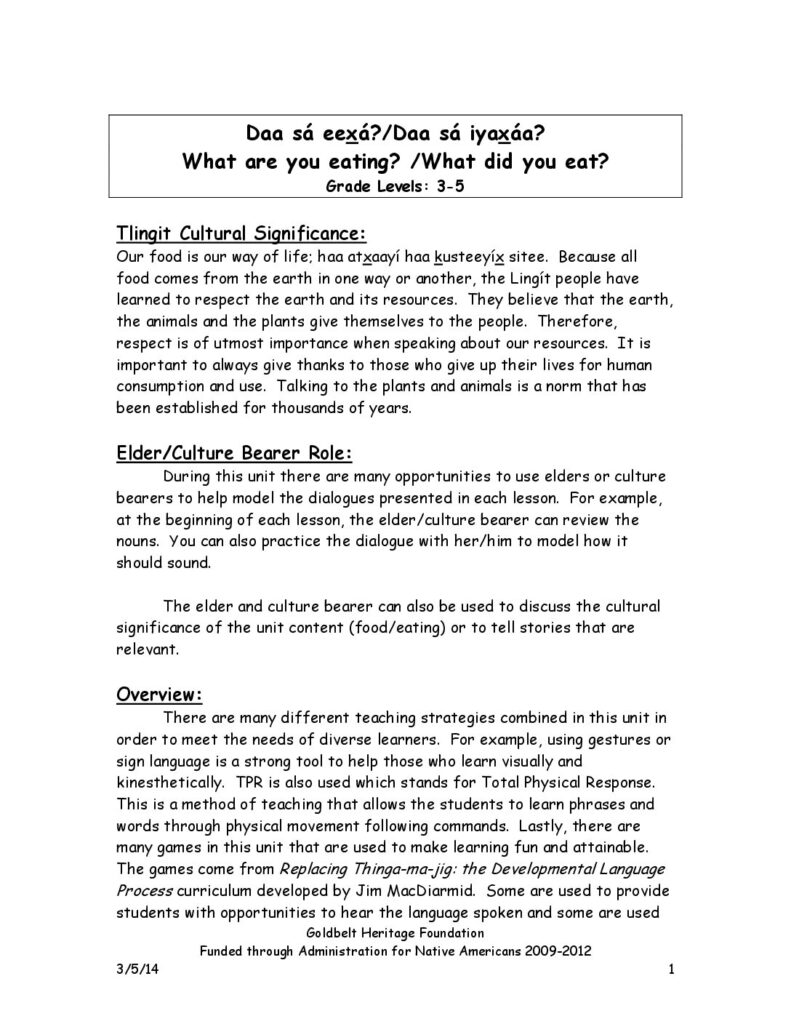
What Did You Catch?
Level 1 – Foundational Learning (Elementary) | Tlingit Language Units | Inquiry-Based, Direct Instruction
What Do You Have?
Level 1 – Foundational Learning (Elementary) | Tlingit Language Units | Inquiry-Based, Direct Instruction
What is She Wearing?
Level 1 – Foundational Learning (Elementary) | Tlingit Language Units | Inquiry-Based, Direct Instruction
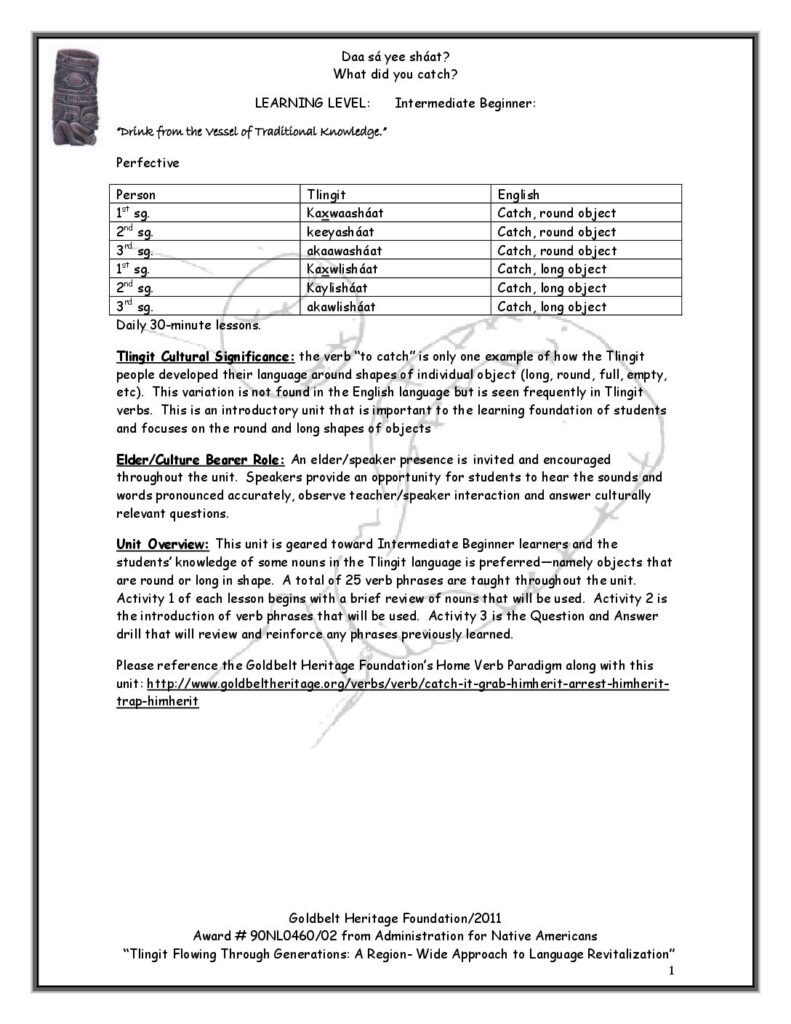
Weather
Level 1 – Foundational Learning (Elementary) | Tlingit Language Units | Direct Instruction