Weaving
Level 4 – Advanced Practice (High School) | Tlingit Language Units | Kinesthetic Learning, Direct Instruction
Goldbelt Heritage Foundation Funded through Administration for Native Americans 2009-2012 3/5/14 1 Da.áak Weaving Grade Levels: 3-12 Tlingit Cultural Significance: This unit is based on the old tradition of weaving baskets. Basket making was one of the oldest and most important arts in the Tlingit economy. Woven basketry was fairly prominent in all coastal Native groups from the Aleutian Chain to the Columbia River. Many baskets, mats, bags, etc. were sewn, coiled, twined or plaited from a variety of materials. Twining (the same type of weave as used in the Chilkat Blanket) was reserved for the spruce root baskets of the Tlingit. These water-tight vessels augmented the Tlingit’s selection of wooden cooking utensils common among the Northwest Coast Indians. Baskets were made to be used and their shape was dictated by the use for which they were intended. Some were cook kettles, water jars, drinking cups and food dishes. Some…
Related Resources
Sewing
Level 4 – Advanced Practice (High School) | Tlingit Language Units | Kinesthetic Learning, Direct Instruction
What Are You Eating?
Level 1 – Foundational Learning (Elementary) | Tlingit Language Units | Inquiry-Based, Direct Instruction
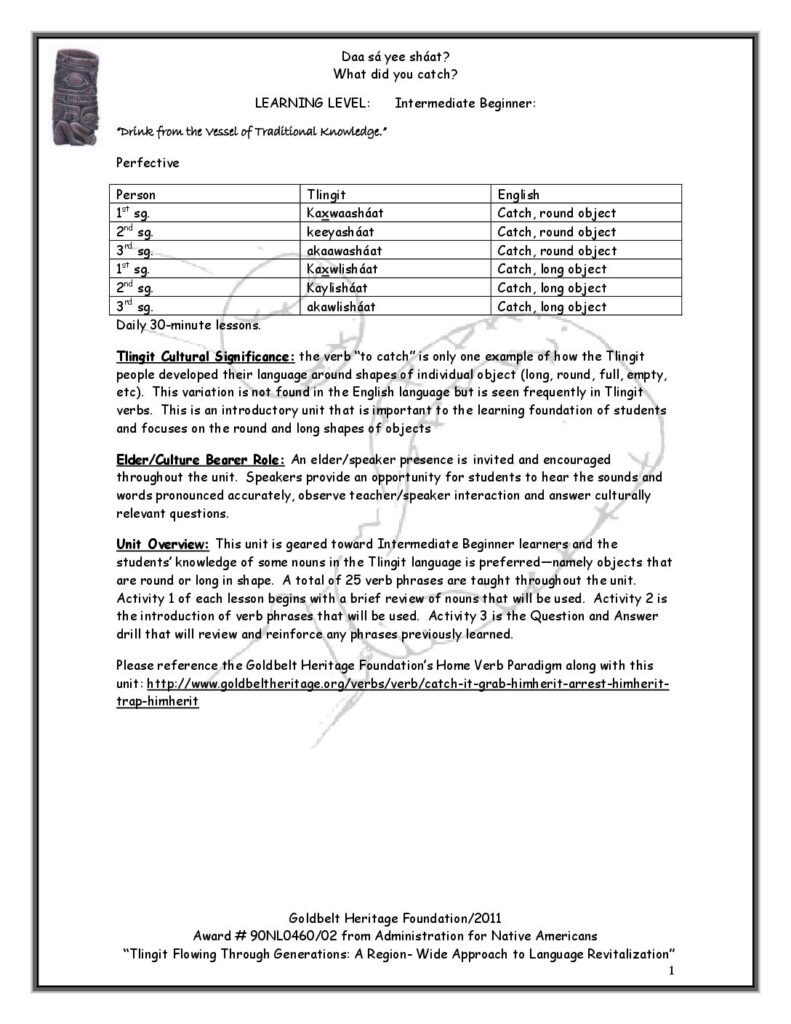
What Did You Catch?
Level 1 – Foundational Learning (Elementary) | Tlingit Language Units | Inquiry-Based, Direct Instruction
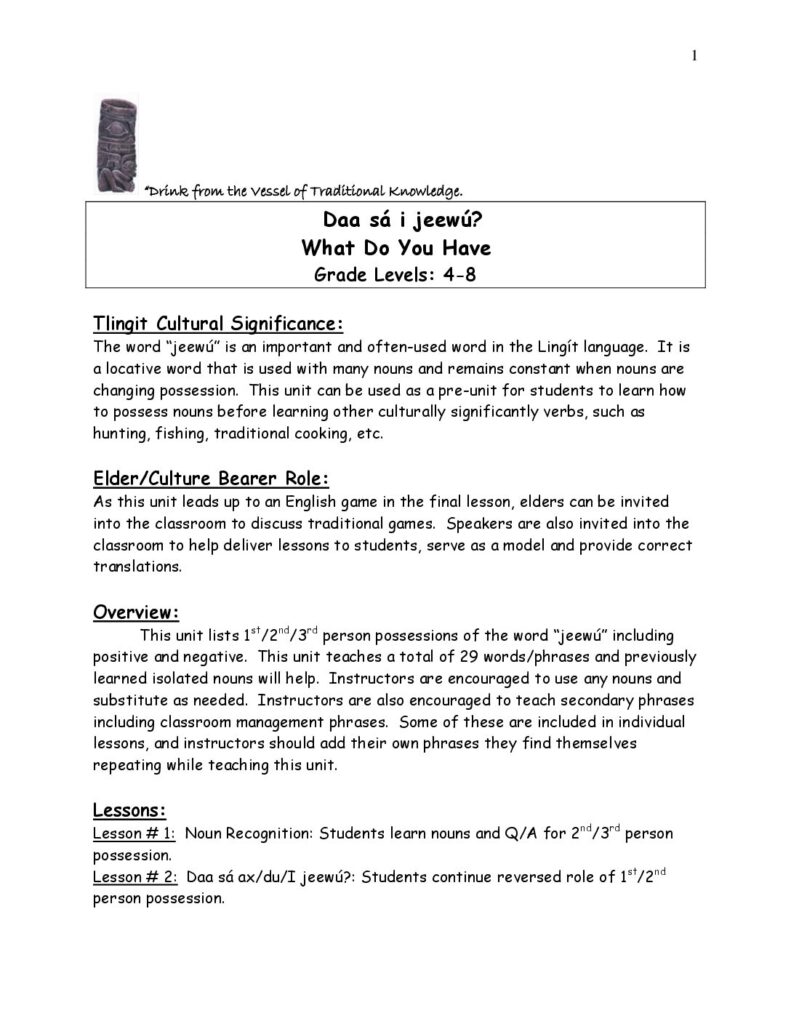
What Do You Have?
Level 1 – Foundational Learning (Elementary) | Tlingit Language Units | Inquiry-Based, Direct Instruction
What is She Wearing?
Level 1 – Foundational Learning (Elementary) | Tlingit Language Units | Inquiry-Based, Direct Instruction